When you imagine ancient Egypt, grand pyramids, mysterious FCM99 hieroglyphs, and powerful pharaohs likely come to mind. But beyond the monumental architecture and intricate religion, daily life for ancient Egyptians was also filled with leisure and fun. One important aspect of their social and cultural life was gaming. Games were more than just entertainment; they reflected beliefs, social status, and even the connection between humans and the divine.
If you’re intrigued by history and want to explore a unique theme for your next game night, why not dive into the world of ancient Egyptian games? In this article, we’ll explore what we know about the games they played, their significance, and how to host your own ancient Egyptian-inspired game night.
The Cultural Role of Games in Ancient Egypt
Games in ancient Egypt were enjoyed by people of all social classes—from pharaohs and nobles to common citizens. These games often served multiple purposes: they were social activities, ways to teach strategic thinking, and sometimes had religious or symbolic meanings.
The Egyptians believed life was a balance of order (Ma’at) and chaos, and games often mirrored this idea, with elements of skill, strategy, and chance reflecting human fate and divine will. Archaeologists have uncovered numerous game boards, pieces, and references to gaming in tomb paintings and texts, giving us valuable insights into how the Egyptians spent their leisure time.
Popular Ancient Egyptian Games
- Senet: The Game of Passing
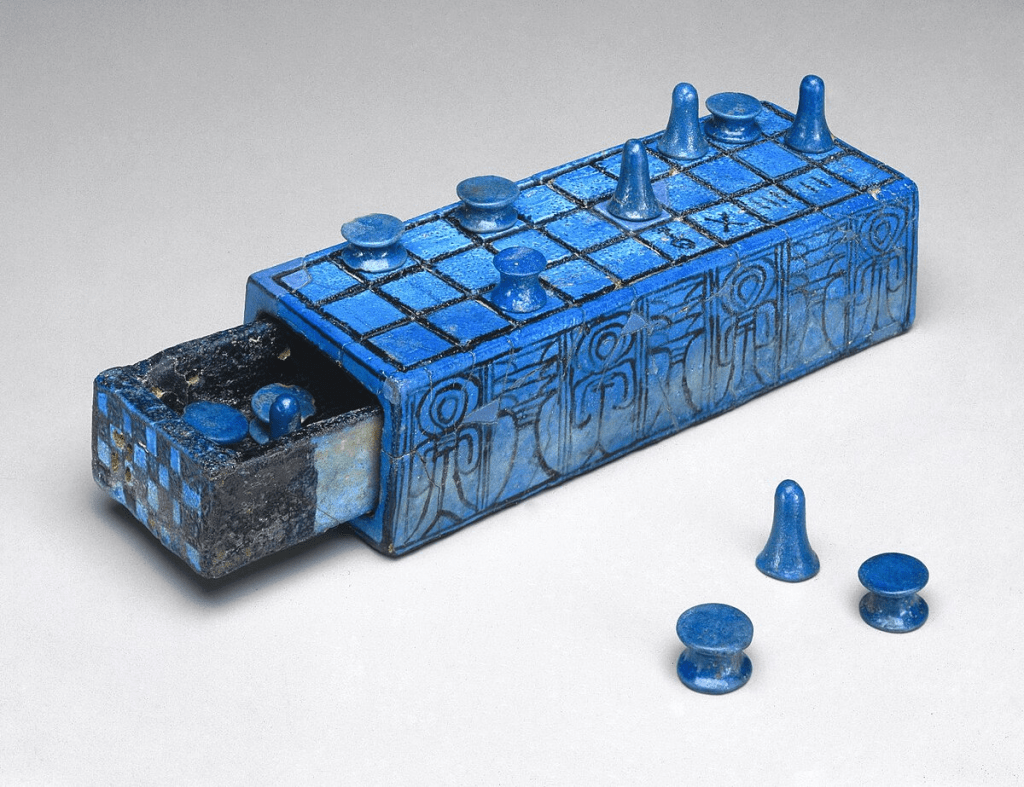
Senet is the most famous and best-documented ancient Egyptian game, dating back over 5,000 years.
How It Was Played: Senet was played on a rectangular board with 30 squares arranged in three rows of ten. Each player had a set of pawns, and they took turns moving them according to the throw of sticks or bones used as dice. The goal was to navigate all your pieces off the board first.
Symbolism: Senet was more than a game; it was thought to represent the journey of the soul through the afterlife, with winning symbolizing safe passage to the afterworld.
Social Context: Senet boards have been found in tombs, indicating its importance in both life and death.
- Mehen: The Serpent Game
Mehen, named after a snake god, was played on a circular board resembling a coiled serpent.
How It Was Played: Players moved lion-shaped pieces around the spiral track. While the exact rules are unclear, it likely involved racing or strategic movement.
Cultural Meaning: The game symbolized protection and the eternal cycle, mirroring the serpent deity who guarded the sun god Ra.
- Hounds and Jackals (58 Holes)
This game was popular not only in Egypt but also across the ancient Near East.
Gameplay: Players moved pegs shaped like hounds and jackals along a board with 58 holes. The goal was to be the first to move all your pieces from start to finish.
Chance and Skill: Dice or casting sticks determined movement, blending luck with strategy.
Artifacts: Beautifully crafted boards and pieces have been found in tombs, often made of ivory or wood.
- Throwing Games and Dice
Egyptians used knucklebones and throwing sticks, precursors to dice, for various games of chance.
Social Use: These games were popular in both casual settings and gambling.
Symbolism: Throwing games were sometimes associated with fate and the gods’ will.
How to Host Your Own Ancient Egyptian Game Night
Recreating an ancient Egyptian game night can be a fun and educational experience for friends and family. Here’s how to bring the spirit of ancient Egypt into your home:
- Choose Your Games
Start with Senet, the iconic Egyptian game, as many replicas and printable boards are available online. If you want to be more adventurous, try creating a version of Mehen or Hounds and Jackals using simple craft materials. - Set the Atmosphere
Decor: Use Egyptian-inspired decorations like hieroglyphic posters, papyrus scrolls, and gold-colored accents.
Music: Play ambient Egyptian-themed music or sounds of the Nile to enhance immersion.
Dress Code: Encourage guests to dress in simple linen tunics or Egyptian-inspired accessories like headbands or collars.
- Explain the History and Rules
Before playing, share some fascinating facts about the games and their cultural importance. For example, explain how Senet was connected to beliefs about the afterlife or how Mehen symbolized protection. - Prepare Themed Snacks
Offer Middle Eastern-inspired snacks like dates, figs, nuts, and flatbreads. Mint tea or pomegranate juice can complete the experience.
Why Ancient Egyptian Games Still Matter
Ancient Egyptian games remind us that play is a timeless and universal human activity. Despite the vast gulf of time, these games connected players in much the same way modern games do: providing fun, challenge, and social interaction.
Moreover, these games offer insight into ancient Egyptian values, religion, and social life. For instance, the spiritual symbolism of Senet shows how leisure activities could reflect complex beliefs about life, death, and the cosmos.
Playing these ancient games today also helps preserve cultural heritage and educates us about humanity’s shared love for play.
Fun Facts About Ancient Egyptian Games
Pharaoh Tutankhamun’s tomb included beautifully crafted game sets, suggesting the importance of games even for royalty.
The rules of Senet were lost for centuries but have been partially reconstructed from ancient texts and modern research.
Some historians believe Senet was the world’s first board game.
Dice and throwing sticks used by Egyptians were among the earliest known random number generators in human history.
Conclusion
An ancient Egyptian game night offers a unique way to explore history, culture, and the joy of play. Whether you’re rolling sticks in Senet or moving lion pieces on a Mehen board, you’re participating in traditions that stretch back thousands of years.
So gather your friends, prepare your game boards, and embark on a journey to the Nile’s banks, where strategy, chance, and mythology intertwine. It’s a night of fun, learning, and connection — just as it was for the ancient Egyptians.
 Site Title